
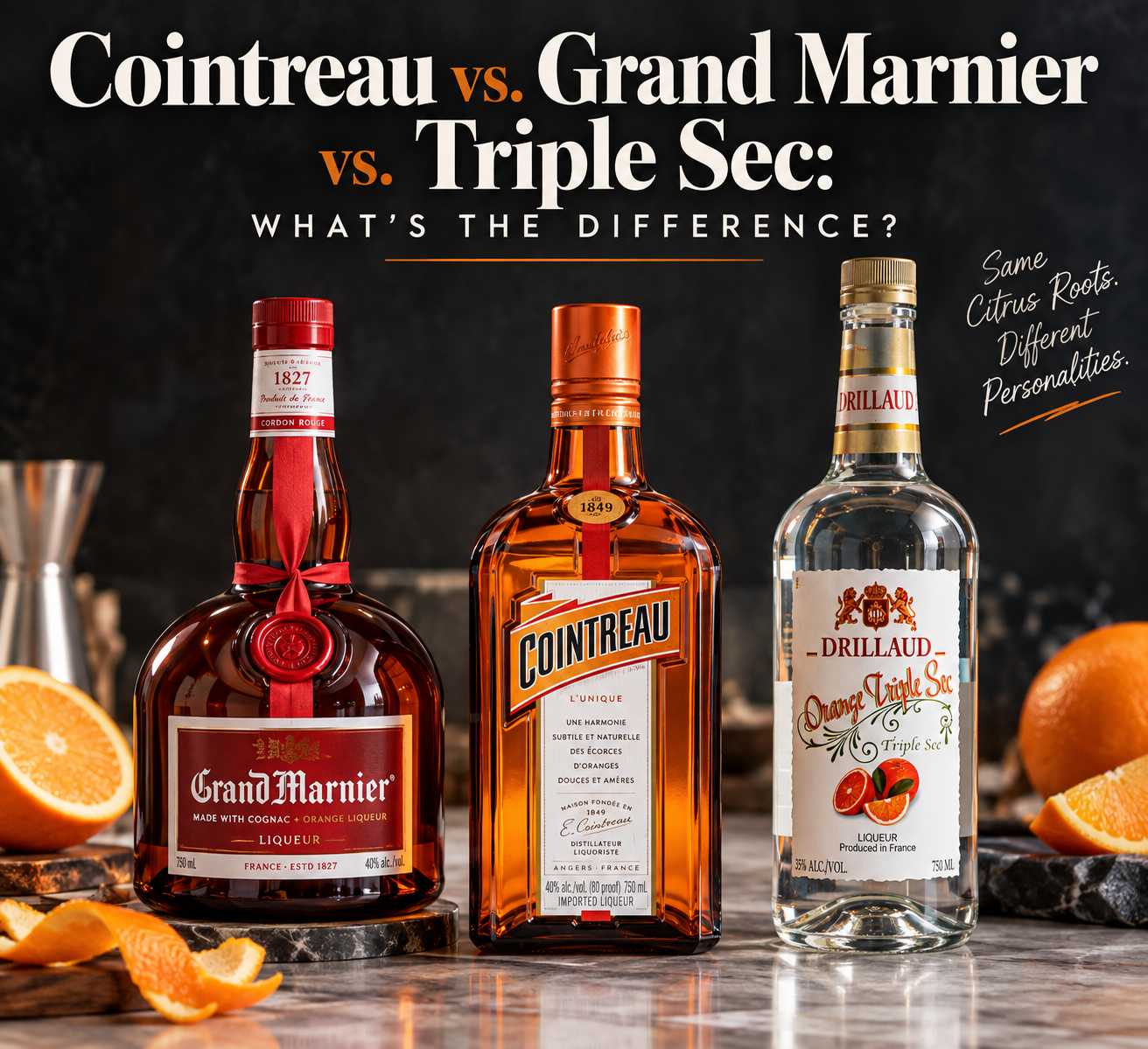
Copyright A Bar Above, created with AI technology
Are Cointreau, Grand Marnier, and Triple Sec the Same?
The recipe calls for Cointreau, but you only have Grand Marnier. Or maybe there’s a bottle labeled triple sec hiding in the back of your liquor cabinet. Can you substitute one for another? And are Cointreau and triple sec basically the same thing?
All good questions! Cointreau, Grand Marnier, and triple sec are all orange liqueurs, but they aren’t necessarily interchangeable.
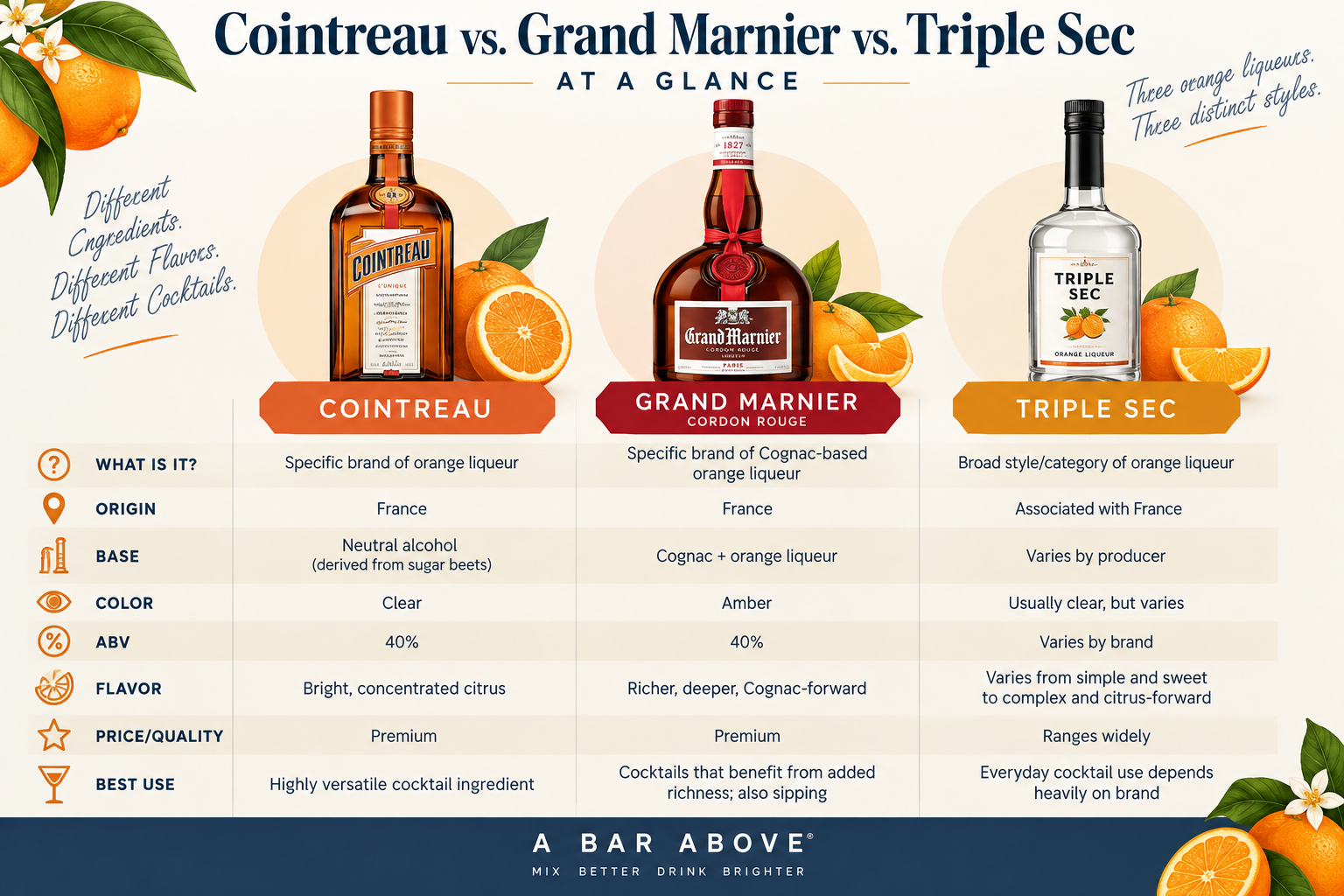
- Cointreau is a specific premium orange liqueur closely associated with the triple sec style.
- Grand Marnier Cordon Rouge combines orange liqueur with Cognac.
- Triple sec itself is just a broader category rather than a single brand.
Their flavor, sweetness, base spirits, and overall weight can produce noticeably different results in cocktails. So let’s sort out those bottles once and for all.
Are Cointreau and Grand Marnier the Same Thing?
No. Cointreau and Grand Marnier are both French orange liqueurs, but they aren’t the same product.
They do have several similarities:
- Both are orange-flavored liqueurs.
- Both are produced in France.
- Both are sweetened.
- Both Cointreau L’Unique and Grand Marnier Cordon Rouge are bottled at 40% ABV.
- Both emerged during the late 19th century.
But that’s about where things start heading in different directions:
- Cointreau is a clear orange liqueur made with neutral alcohol and sweet and bitter orange peels.
- Cointreau traces its current signature liqueur to Édouard Cointreau’s recipe from 1885.
- Alternatively, Grand Marnier Cordon Rouge combines Cognac with bitter orange liqueur.
- Louis-Alexandre Marnier Lapostolle created Grand Marnier in 1880.
That difference in base spirit gives each a noticeably different flavor profile and weight, meaning you can't just swap one for the other without a little adjustment. But, to cut to the chase, you can use one in place of the other; it just requires a tiny bit of tweaking.
Note: In the rest of this article, we'll mostly compare Cointreau and Grand Marnier, now that you understand that "triple sec" is the umbrella category and varies greatly depending on the brand.
We're just a bunch of regular people who love making classy drinks. Join us!

What Is Cointreau?
Cointreau is a clear French orange liqueur made in Angers, France.
The House of Cointreau dates back to 1849, but the orange liqueur we recognize today came later. After years of experimentation, Édouard Cointreau developed his crystalline orange liqueur in 1885, using sweet and bitter orange peels to create an intensely aromatic but relatively dry style compared with many orange liqueurs of the era.
Cointreau is closely associated with the triple sec style, although you’ll now see the bottle primarily labeled simply as an orange liqueur in the United States.
Its neutral alcohol base lets the orange remain front and center, which is a big reason Cointreau works so well across cocktails made with tequila, gin, vodka, rum, and brandy.
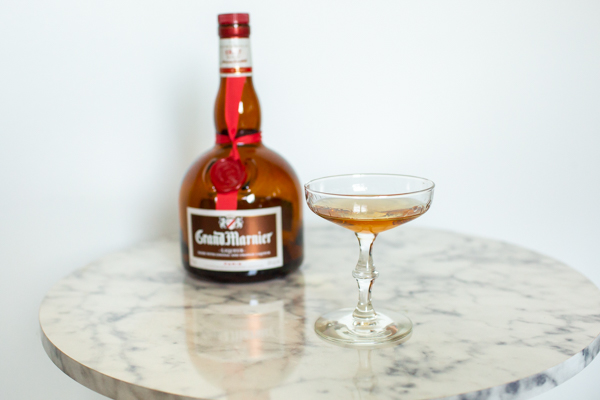
Copyright A Bar Above
What Is Grand Marnier?
Grand Marnier Cordon Rouge is a French orange liqueur made by combining Cognac with bitter orange liqueur.
Louis-Alexandre Marnier Lapostolle created it in 1880, originally calling his creation Curaçao Marnier. His friend César Ritz later suggested the considerably grander name we know today.
And yes, that Ritz.
The flagship Cordon Rouge contains 51% Cognac, which is the big thing to remember when comparing it with Cointreau. Instead of a neutral alcohol base that steps aside and lets orange dominate, Grand Marnier brings in the deep character of Cognac.
That means you’re getting orange, but you’re also getting considerably more richness and complexity from the aged spirit.
Stock photo via DeKuyper
What Is Triple Sec?
Here’s where things get a little confusing.
As I mentioned, triple sec is a broad term for a style of orange liqueur, rather than one specific brand.
Cointreau is probably the most famous premium example associated with the category, but plenty of other producers make triple sec at different price points, proofs, sweetness levels, and levels of quality.
Think of it this way: Cointreau is a specific brand with its own recipe, proof, and flavor profile. Triple sec is a broader term covering multiple orange liqueurs from different producers.
And despite some very confident explanations floating around the internet, triple doesn’t give us a neat, universally accepted production formula. There isn’t one strict recipe all triple secs have to follow, so the term itself doesn’t dictate one specific production method, proof, or sweetness level.
So if a cocktail recipe simply calls for triple sec, Cointreau is generally an excellent option... but don’t assume every bottle labeled "triple sec" is going to taste exactly like Cointreau. They can vary quite a bit!
Copyright A Bar Above
How Are Cointreau, Grand Marnier & Triple Sec Made?
Production is where the differences between these orange liqueurs really start making sense.
How Cointreau Is Made
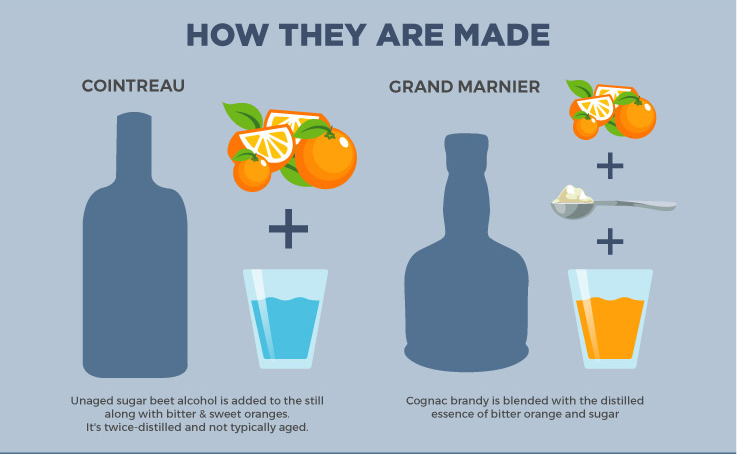
Cointreau uses a neutral alcohol derived from sugar beets grown in northern France. The neutral base is intentional: It allows the orange aromas to come through without a strongly flavored spirit competing with them.
Cointreau combines sweet and bitter orange peels with neutral alcohol, sugar, and water, capturing those aromatic orange compounds through distillation. The finished liqueur is crystal clear despite all that orange flavor.
How Grand Marnier Is Made
Grand Marnier takes a very different route.
Its flagship Cordon Rouge combines fine French Cognac with bitter orange liqueur, with Cognac making up 51% of the blend.
And that’s important because Cognac has already developed flavor through its own production and aging process. So instead of building orange flavor on a relatively blank canvas, Grand Marnier combines orange with an aged brandy that brings plenty of personality of its own.
This is one reason people often sip Grand Marnier on its own rather than mixing it into cocktails.
How Is Triple Sec Made?
This one’s harder to answer because triple sec isn’t one specific product with one standardized recipe, like we've already talked about.
Different brands use different base spirits, orange peels, production methods, sugar levels, and proofs. That’s why one bottle of triple sec may be fairly simple and sweet while another is intensely aromatic and complex.
In other words, don’t assume the $8 bottle labeled TRIPLE SEC and a bottle of Cointreau are going to taste identical just because they can fill the same role in a cocktail. That’s also why I prefer thinking of triple sec as a category, while Cointreau is one specific expression within that general world of orange liqueurs.

What Do Cointreau, Grand Marnier & Triple Sec Taste Like?
This is ultimately the difference that matters when you’re standing in front of your liquor cabinet wondering whether you can swap bottles.
Cointreau is brighter and more citrus-forward. Expect an intense orange aroma with both sweet and bitter citrus character and a relatively clean finish.
Grand Marnier is richer and heavier, with orange layered over the deeper flavors you’d expect from Cognac. That can mean notes reminiscent of vanilla, oak, baking spice, and dried fruit alongside the bitter orange.
Triple sec is the wildcard. Because we’re talking about a category rather than one specific bottle, flavor and sweetness can vary significantly by producer. Some inexpensive versions are straightforward, sweet, and strongly orange-flavored; premium versions can offer considerably more complexity and intensity.
That’s why “just use triple sec” doesn’t tell you quite as much about the finished cocktail as naming a specific brand does.
Is Cointreau the Same as Triple Sec?
As you already know, Cointreau is commonly considered a type of triple sec, but Cointreau and triple sec aren’t synonymous.
So if a recipe calls for triple sec, Cointreau is generally an excellent choice.
Going the other direction requires a little more thought. If a recipe specifically calls for Cointreau, you can usually substitute another triple sec, but the cocktail may change depending on the brand you choose—particularly if it’s lower-proof, sweeter, or less intensely orange.
For something like a Margarita, that’s not necessarily a problem. Just taste and adjust rather than assuming every orange liqueur behaves exactly the same way.
Copyright A Bar Above
Cointreau vs. Grand Marnier vs. Triple Sec in Cocktails
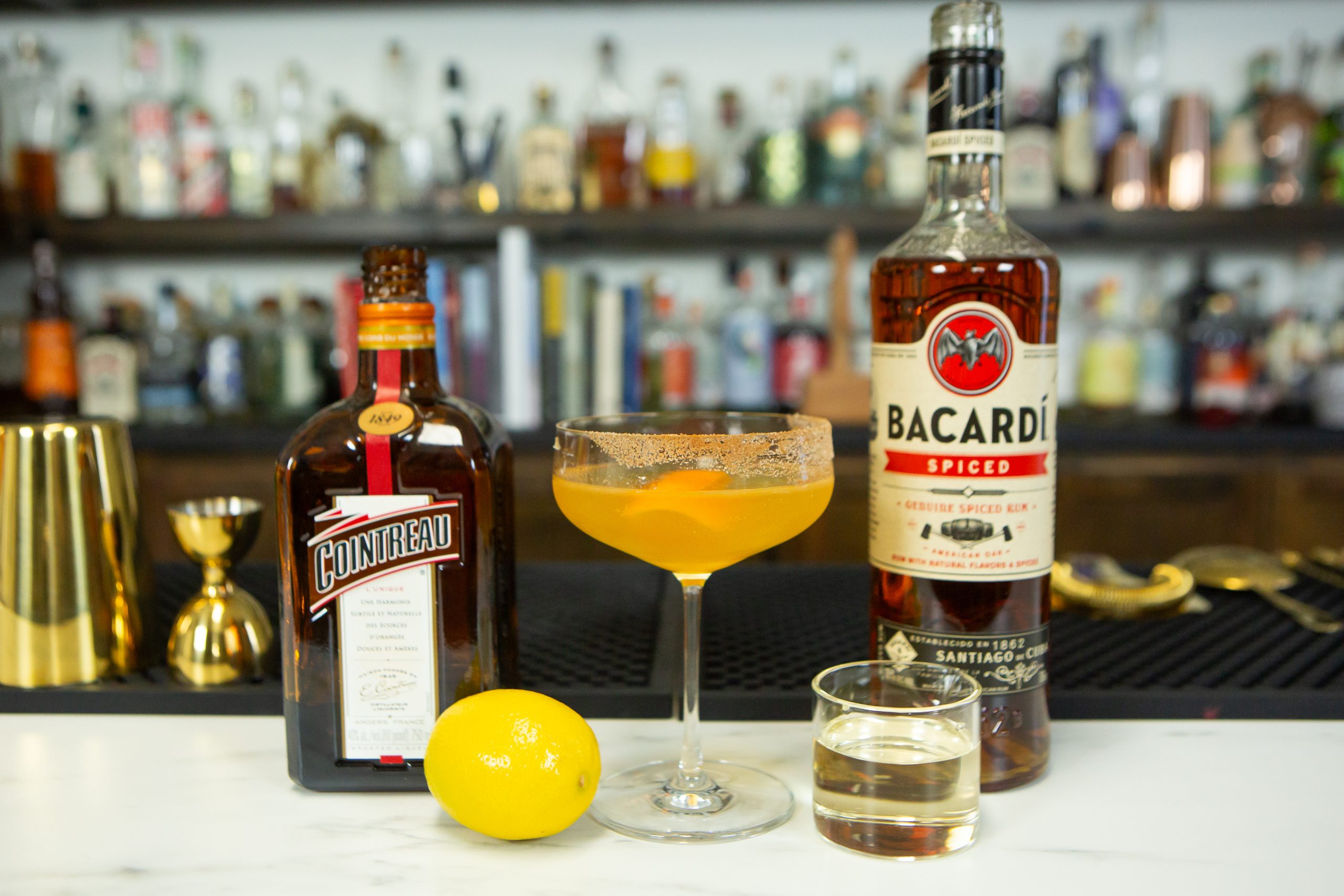
Personally, I find Cointreau the most versatile of the three for cocktails.
Its concentrated citrus character and relatively clean base allow it to work easily with a wide range of spirits without adding the additional flavor and weight of Cognac. That’s especially useful with spirits like tequila, gin, vodka, and lighter rum.
Grand Marnier makes more of a statement.
Its Cognac base can add richness, depth, and complexity to a drink—which can be fantastic when that’s what the cocktail needs. But it can also noticeably alter a lighter drink that was formulated around a cleaner orange liqueur.
And of course, generic triple sec depends heavily on the bottle. A good-quality triple sec can be an extremely versatile cocktail ingredient, while a sweeter or lower-proof option may noticeably change the balance of a recipe written specifically for Cointreau.
Copyright A Bar Above
Can You Substitute Cointreau for Grand Marnier?
Yes, usually—but expect the cocktail to change.
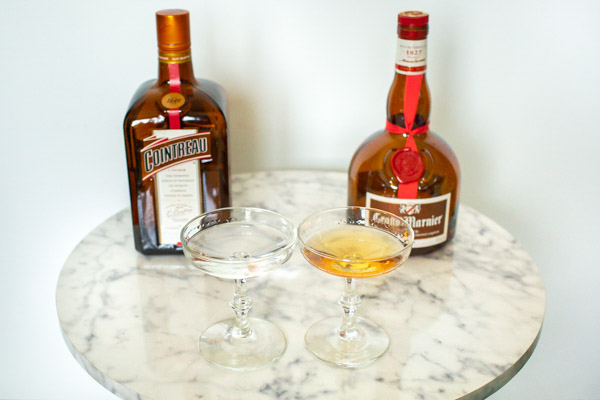
If a recipe calls for Grand Marnier and you use Cointreau instead, you’ll lose some of the richness and aged-spirit character contributed by the Cognac.
Your cocktail will generally come across as brighter, cleaner, and more citrus-focused.
I wouldn’t automatically pour in an extra 1/8 ounce, as we suggested in the older version of this article. The better approach is to start with the recipe’s original measurement, taste the drink, and adjust as necessary. Depending on the cocktail, you may decide it doesn’t need adjusting at all.

Copyright A Bar Above
Can You Substitute Grand Marnier for Cointreau?
Again, yes—but this substitution is usually more noticeable.
Replacing Cointreau with Grand Marnier introduces Cognac flavor along with the orange, giving your cocktail more body and aged-spirit character. That can work beautifully in a Margarita or Sidecar variation.
In something lighter and more delicate, though, Grand Marnier may start competing with the other ingredients rather than simply providing orange flavor. I’d use the same strategy here: Start with the recipe’s specified amount rather than automatically changing the ratio.
Taste. Then adjust.
I know that’s slightly less satisfying than giving you one magical substitution formula, but cocktails aren’t particularly interested in making our lives that convenient. It really is a science, and it also depends on your personal tastes.
Copyright A Bar Above, generated with AI
Can You Substitute Triple Sec for Cointreau?
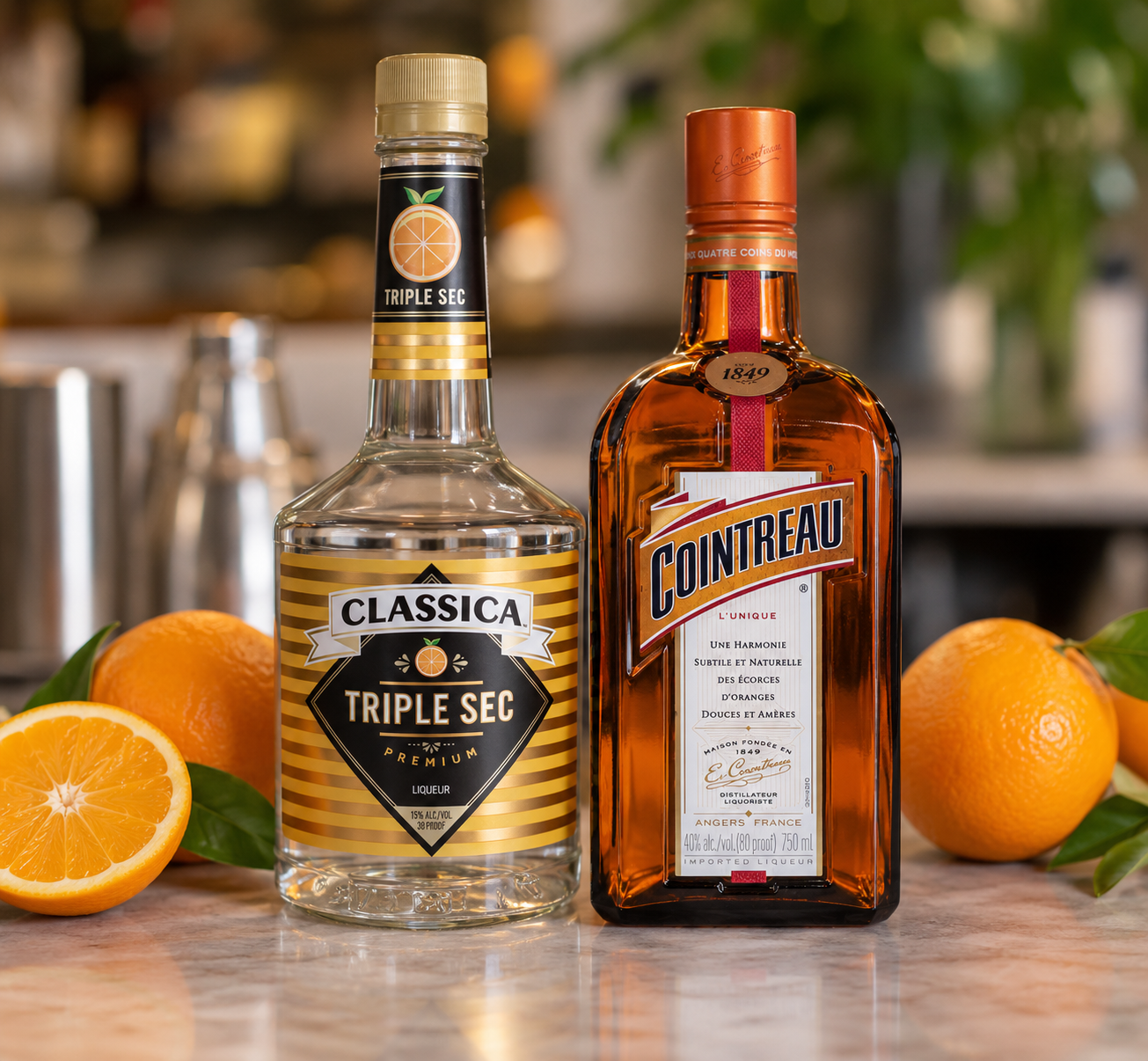
Usually, yes. But the closer your triple sec is to Cointreau in proof, sweetness, and orange intensity, the less noticeable the substitution will be.
As we've already detailed, with a lower-proof or considerably sweeter triple sec, you may notice a bigger difference in the cocktail’s balance. A cheap triple sec just is not going to taste as good in a cocktail that typically relies on Cointreau.
Start with the same measurement called for in the recipe, taste, and adjust from there. And remember that triple sec on a label tells you the general type of liqueur you’re working with; it doesn’t guarantee that it will behave exactly like Cointreau.

Copyright A Bar Above, generated with AI
Can You Substitute Triple Sec for Grand Marnier?
You can, but this is a more significant substitution because you’re replacing Grand Marnier’s Cognac character with a generally lighter orange liqueur. So it's a bit trickier.
You’ll still get orange flavor, but not the same richness, body, or aged-spirit notes. This substitution isn't really a direct or equal swap.
Again, I’d start with the recipe’s original measurement before adjusting anything else.
If the Grand Marnier is an important part of the drink’s overall character—rather than simply there to provide orange flavor—you’re likely to notice the substitution more.
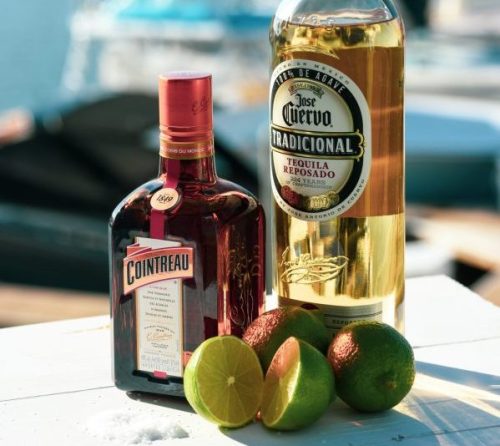
Photo by by YesMore Content via www.unsplash.com
Popular Cointreau Cocktails
Cointreau appears in a huge number of classic and modern cocktails, but here are a few particularly well-known examples:
Margarita: Tequila, orange liqueur, and fresh lime make one of the most recognizable cocktails in the world—and Cointreau is a natural fit.
Cosmopolitan: Vodka, Cointreau, cranberry, and lime create the famous pink cocktail.
Sidecar: Cognac, orange liqueur, and lemon form a classic sour structure.
White Lady: Gin, orange liqueur, and lemon create another classic member of the sour family.
You can also browse our favorite Cointreau cocktails for more ideas.

Copyright A Bar Above, generated with AI
Popular Grand Marnier Cocktails
Grand Marnier works particularly well when you actually want its richer Cognac character to show through.
Cadillac Margarita: Probably the drink most people immediately associate with Grand Marnier, commonly featuring the liqueur as part of the drink or as a float.
Sidecar variations: Since the Sidecar already contains Cognac, Grand Marnier’s base spirit can fit naturally into the cocktail’s flavor profile.
Grand Marnier can also be enjoyed neat or over ice, where there’s more room to appreciate its Cognac and bitter-orange character.

Copyright A Bar Above, generated with AI
Cointreau vs. Grand Marnier vs. Triple Sec: Which Should You Use?
So, Cointreau vs. Grand Marnier vs. triple sec—which one belongs on your bar cart?
If I wanted one highly versatile premium orange liqueur primarily for cocktails, I’d reach for Cointreau. It’s bright, citrus-forward, and works beautifully across tequila, gin, vodka, rum, and brandy drinks.
If I wanted something richer and more spirit-forward—or something I’d also sip on its own—Grand Marnier brings Cognac character along with its orange flavor.
And if you’re looking for an everyday triple sec, you’ve got plenty of options at different price points. Just remember that triple sec is a category, not one standardized product, so the bottle you choose can absolutely affect the finished cocktail.
(This is my gentle way of saying "DON'T JUST BUY THE CHEAPEST BOTTLE.")
Most importantly, don’t panic when a recipe calls for an orange liqueur you don’t have.
The bottomline: Cointreau keeps things bright and citrus-forward. Grand Marnier brings richness and Cognac character. Other triple secs can range considerably in sweetness, proof, and orange intensity.
You can usually make a substitution... You just need to know what you’re changing. And if you’re forced to taste the cocktail afterward to make sure it worked?
Well, there are worse things in the world. Cheers!



The Bartender Journey Podcast this week is all about Grand Marnier! Once again, great minds think alike!
http://www.bartenderjourney.net/bartender-journey/grand-marnier-iconic-orange-liqueur
Did you guys go to the podcast conference in Texas this weekend? I want to hear all about it!
How funny – what a coincidence again! The conference was really great, I have lots of new ideas for the podcast!
Grand Marnier is now made in Bourg-Charente, (cahrente department // Cognac “arrodissement”)
Ah thank you Raphael!
This is an interesting topic, as there is a lot of conflicting information (and misinformation) about orange liqueurs. Based on a few different sources (primarily Andrew Willett of Elemental Mixology, but others as well), I’ve come to gather that “curacao” was originally a designation for Dutch liqueurs using laraha orange peels (a more bitter type of orange that evolved from the Valencia oranges planted by Spanish settlers) from the island of Curacao. It then seems as the term morphed into nomenclature for orange liqueurs using any type of bitter orange, even those not using that specific type of orange peel for Curacao. Over the years, other types of orange peels have been used in curacao type liqueurs, especially the bitter Seville. Senior Curacao is apparently the only curacao liqueur still using laraha orange peels exclusively.
“Triple sec” is exactly what it means in French, “triple dry”, and contains less sugar than “sec” or “doux” curacaos; it doesn’t have to do with being triple distilled or the number of orange peel types used, which are commonly cited as the meaning for “triple sec”.
Cointreau (historically a “triple sec curacao blanc”) and Grand Marnier (curacao blended with brandy and sugar, i.e. “orange flavored brandy”) are both curacao liqueurs. If you look at historical labels for both, they’ve used “triple sec” and “curacao” previously, the guess being that those designations were removed as cheap triple sec / curacao liqueurs began to be produced and they didn’t want their premium positioned brands to be associated with those products. Hence now their labels have none of those terms.
As an operator and consultant always looking to reduce costs while maintaining similar quality in my drinks programs, I’ve tried to find less expensive alternatives for Cointreau and Grand Marnier. Shaving a quarter off a drink cost means I can either lower my drink price by a buck or make more profit at the same price. At last count I’ve tried over 30 different orange liqueurs over the years, and currently have 9 in my home bar, in addition to whatever selection is at work.
Cointreau is tough to beat, and is still the gold standard for me. Combier is very similar to Cointreau, but to me isn’t quite as good, and it costs the same or more as Cointreau so why bother. Luxardo Triplum is cheaper and a solid product, but has orange blossom essence in addition to the orange peel maceration and you can taste it. There’s a floral element to it as opposed to the more straightforward orange taste of Cointreau, and it does come through in most mixed drinks I’ve tried it with. I like it paired with gin in something like a White Lady or Pegu Club, but not as much in drinks with dark spirits or a margarita. Not surprisingly if you know that Grand Marnier is a clear curacao blended with brandy, Grand Marnier produces a clear curacao (Cordon Jaune, “yellow cord”), but it’s only available in Europe and not in the U.S. Giffard Curacao Triple Sec is a very good product, but not much cheaper and tough to source in the U.S.; the same goes for Merlet Trois Citrus. Senior Curacao has a very good orange flavor, but is a little one note. Patron Citronge is relatively inexpensive and has a solid orange punch to it, but has a slightly artificial aroma and taste to it. Marie Brizard Triple Sec doesn’t have enough orange flavor for me as compared to Cointreau. The European version of Bols Dry Curacao is solid for the price, but the U.S. version isn’t very good, just like all the other cheap options (DeKuyper, Arrow, Leroux, etc.).
I’ve had much better luck substituting a less expensive offering for Grand Marnier. I actually prefer both Bauchant and Mathilde XO to Grand Marnier, and they’re both significantly cheaper. Gabriel Boudier Orange Fine Champagne is also very good, but tough to source in the U.S.
If I could only have a single orange liqueur at my bar, it would probably be the recently released Pierre Ferrand Dry Curacao. It splits the difference between the two camps–it’s more “orange-y” than Grand Marnier, and richer than Cointreau due to the brandy base.
Very impressive commentary about orange liqueurs. I’m a fan of Calliers Triple Sec. I substitute an ounce of Calliers instead of a muddled orange for an Old Fashion. Makes for a very solid cocktail.
Very helpful, thank you!
Mix either, 2/3rds diet maple syrup, one third either Granny or Cointreau spirit, for an amazing pancake syrup that still stays on the light side of 30-50 calories per ounce, a half cup 200 calories tops. Use powdered sugar on the pancake, and use cinnamon in the 1/3rd cup pancake batter. Use a high protein shake like Edge instead of milk in the batter, coconut oil for the pan, and you’ve got 650 calories of gut stuffing morning wonderment that will keep you full till late afternoon and recharge that two mile run before you take your first step.
That sounds delicious, thanks for the tip!
I use both in the Queen’s Cousin. https://www.youtube.com/watch?list=UUOyOfuAph9KK0DFRFIvmz3Q&v=fsb7eg99iw0
http://www.elementalmixology.com/liquors/curacao.html
This is the definitive article on Curacao Liqueurs. Cointreau is actually an extra-sec Curacao liqueur and Grand Marnier is an orange-flavored brandy liqueur. Pierre Ferrand Dry Curacao is also an orange-flavored brandy liqueur.
This is a great resource, thanks for sharing!
I’m not sure what the difference is, but I like both!
Great comparison! I always thought Cointreau and Grand Marnier were pretty similar, but your breakdown of their flavor profiles and uses in cocktails really clarified things for me. I’ll definitely approach my next margarita and mai tai with this new knowledge. Thanks for sharing!
Glad this was helpful!